The COCOBOD scholarship for children of Ghana's cocoa farmers
The Ghana Cocoa Board funds education for the children of registered cocoa farmers. Few outside the cocoa belt know about it. Here is how it works.
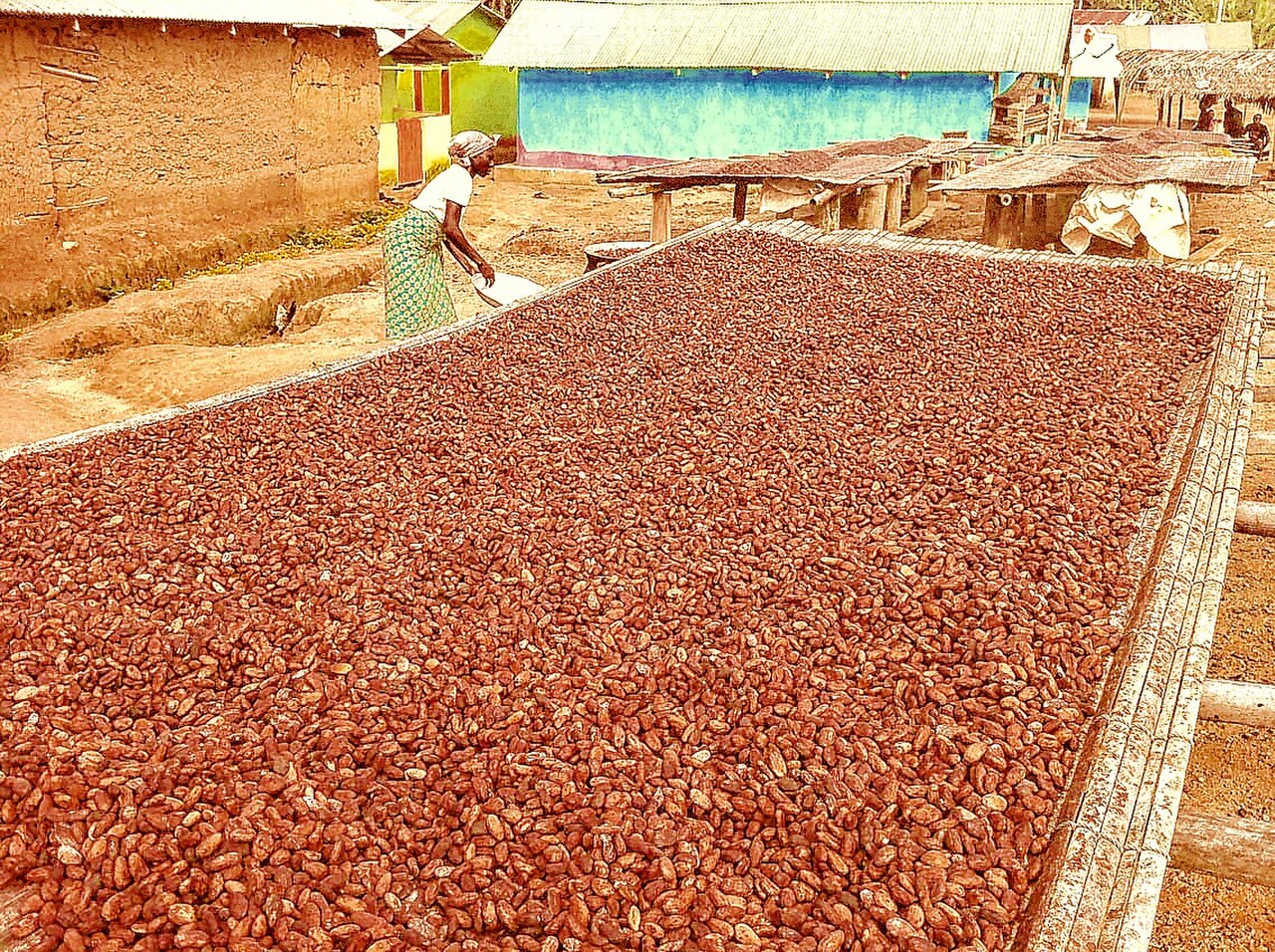
The Ghana Cocoa Board, known to everyone as COCOBOD, has run a scholarship scheme for the children of registered cocoa farmers since the 1950s. It is one of the oldest sector-specific scholarship programmes in West Africa and one of the most quietly consequential. If your parent supplies cocoa to a Licensed Buying Company, this scheme is probably the most direct route to funded education you have.
The cocoa farming community in Ghana is large. COCOBOD’s own count puts it at over 800,000 farmers across six regions. Many of their children have completed secondary and tertiary education on this scheme. Here is who qualifies, what the awards cover, when applications run, and how to actually win one.
What COCOBOD is and why it funds education
COCOBOD is the statutory regulator of Ghana’s cocoa sector, established in 1947 and restructured over the decades into its current form. It buys cocoa from licensed buying companies, processes some of it domestically, exports the rest, and reinvests a slice of revenue into farmer welfare. Scholarship funding is one of the longest-standing of those welfare lines, alongside farmer pensions, replanting subsidies, and chemical distribution.
The scheme is explicitly framed by COCOBOD as recognition of the cocoa farmer’s contribution to the national economy. The country runs on cocoa export revenue; the children of cocoa farmers are funded as repayment of that contribution. It is the closest thing Ghana has to a sector-specific generational investment in human capital.
What the scholarship covers
The COCOBOD scholarship is structured around two main levels:
- Senior High School (SHS) awards, covering school fees, boarding, books, and uniform for the duration of the SHS programme at a public school. This is the larger pool by volume.
- Tertiary awards, covering university or polytechnic fees, with smaller cash allowances for books and personal expenses, for the duration of an accredited Ghanaian first degree.
Both award types are administered as direct payments to the institution; cash does not flow through the family. Allowances paid in cash go to a student’s own bank account once one is opened.
Awards are renewable annually conditional on academic progression. A student who is asked to repeat a year for academic reasons typically loses the renewal that cycle.
In recent cycles, COCOBOD has also added:
- Special awards for top-performing children of cocoa farmers, including limited overseas study support in priority fields
- Internship and apprenticeship support for tertiary students placed with COCOBOD or its affiliated organisations during long vacations
The current scholarship circular on the COCOBOD website lists the exact award amounts for the running year.
Who is eligible
The defining eligibility marker is parentage. You must be the biological child or legal ward of a registered cocoa farmer, meaning a farmer whose name appears on the records of a Licensed Buying Company (LBC) that supplies COCOBOD. Documentation is requested: a passbook, a Farmer ID, or an attestation from the LBC.
Beyond parentage:
- Ghanaian citizenship is required, evidenced by Ghana Card
- For SHS awards: admission to a public Senior High School in Ghana, evidenced by admission letter
- For tertiary awards: admission to an accredited Ghanaian public tertiary institution
- Academic standing: applicants are expected to meet minimum grade thresholds, historically Aggregate 24 or better in BECE for SHS entrants, Aggregate 12 or better in WASSCE for tertiary entrants
- No double scholarship: applicants on full GETFund, MTN, or similar full awards may be deprioritised; partial awards do not exclude
The scheme prioritises first-generation tertiary applicants and students whose parents are smallholder farmers (under five hectares). Children of large-scale farmers and farmers who have other significant income streams may be assessed differently.
When applications open
The COCOBOD scholarship cycle follows the Ghanaian academic calendar. The pattern, broadly:
| Award type | Typical opening | Typical deadline |
|---|---|---|
| SHS new entrants | June to August (after BECE results) | Four to six weeks after announcement |
| SHS continuing students | July to September | Aligned with new entrants |
| Tertiary new entrants | August to October (after WASSCE / university admission) | Four to six weeks |
| Tertiary continuing students | August to October | Aligned |
Announcements come through:
- The COCOBOD website at cocobod.gh, usually under “Programmes” or “Farmer Welfare”
- Licensed Buying Company offices and their cocoa purchasing clerks in farming communities
- District directorates of education
- The Daily Graphic and Ghanaian Times newspapers
For applicants in farming communities, the LBC purchasing clerk is often the first to receive the notice, even before it appears online. Ask the clerk where your parent supplies cocoa.
How competitive is it
COCOBOD does not publish acceptance figures. The scheme is less competitive on raw numbers than GETFund or MTN Bright because the eligibility is narrow, you have to be the child of a registered cocoa farmer. Within that eligible group, the SHS stream has the largest number of awards; the tertiary stream is tighter. Most well-prepared eligible applicants get something.
How to apply, step by step
1. Confirm your parent’s farmer status
Before anything else, talk to your parent and confirm:
- That they are registered with a Licensed Buying Company
- That they have a Farmer ID, passbook, or LBC record that establishes the supply relationship
- That they can produce documentary evidence on request, this is the foundational requirement and many applications fail here
If your parent’s farmer registration has lapsed, get them to re-register with their LBC before the application window opens. The LBC clerk can guide them.
2. Gather your documents
- Ghana Card (yours)
- Parent’s farmer documentation (Farmer ID, passbook, or LBC attestation)
- Birth certificate establishing the parent-child relationship
- Most recent academic results (BECE results for SHS applicants, WASSCE results and admission letter for tertiary applicants)
- Two passport-sized photographs
- One reference letter from a current or former school
3. Submit through the application channel
COCOBOD has moved progressively to an online application portal, though paper submissions through district directorates are still accepted in remote areas. The portal is announced on the COCOBOD website each cycle.
Fill every field accurately. Be precise about your parent’s LBC and farmer ID number; this is the field the verification team checks first.
4. Submit the LBC verification at the right time
After submission, COCOBOD sends a verification request to the relevant LBC to confirm your parent’s status. Make sure your parent is aware that this verification is coming so they can respond promptly when the clerk asks. Delayed verification is the most common reason for application rejection.
5. Attend verification at district level if asked
Some applicants are called for an in-person verification at the district COCOBOD or district education office. Bring originals of everything you submitted as scans. Verification failure here costs you the award.
Tips that materially help
- Apply through the LBC route first. Your parent’s purchasing clerk often has the application forms in hand and can guide submission. This is faster than the central portal for applicants in remote farming areas.
- Get the academic results slip officially stamped by your school before submitting. Unstamped or photocopied slips have been rejected.
- For tertiary applicants, get your admission letter early. COCOBOD will not process a tertiary application without it.
- If your parent supplies through multiple LBCs, pick the one with the longest-running relationship for documentation. Switching LBCs frequently creates ambiguous records.
Mistakes that cost the award
- Falsifying parent status. COCOBOD verifies with the LBC and the verification is not perfunctory. Forged passbooks have been spotted and applicants barred for life.
- Missing the LBC verification window. The clerk has a defined window to respond. If your parent does not show up, the application closes.
- Applying through the wrong stream. SHS and tertiary streams are separate. A tertiary applicant filing through the SHS form will be rejected.
- Listing the wrong purchasing district. COCOBOD’s verification routes through the district your parent supplies, not the district you live in.
Where to find more
- Official COCOBOD site: cocobod.gh, look for “Programmes” or “Cocoa Farmer Welfare”
- Licensed Buying Company purchasing clerks in farming communities, the first source of application information for many farmer households
- District directorates of education, for the SHS application stream specifically
- Ministry of Food and Agriculture cocoa unit, for sector-wide notices and policy changes
If your application is unsuccessful, you can reapply the next cycle. Strengthen the verification documentation in particular, that is the most common rejection reason, and it is fully fixable.
Share this guide
Found this useful? Send it to a friend who is applying right now.
Need a hand?
Have someone read your application before you submit.
A second pair of eyes on your essays and CV catches what you cannot see anymore. That is what we do.
See our servicesFurther reading
Scholarships
Mastercard Foundation Scholars at KNUST and the University of Ghana

Scholarships
The GNPC Foundation scholarships: oil money funding the next generation of Ghanaian engineers

Scholarships
Ashesi University financial aid: getting into the cohort that pays nothing
Scholarships