Mastercard Foundation Scholars at KNUST and the University of Ghana
The largest scholarship pipeline into Ghana's two flagship public universities. How the programme actually selects students, and what gets you in.
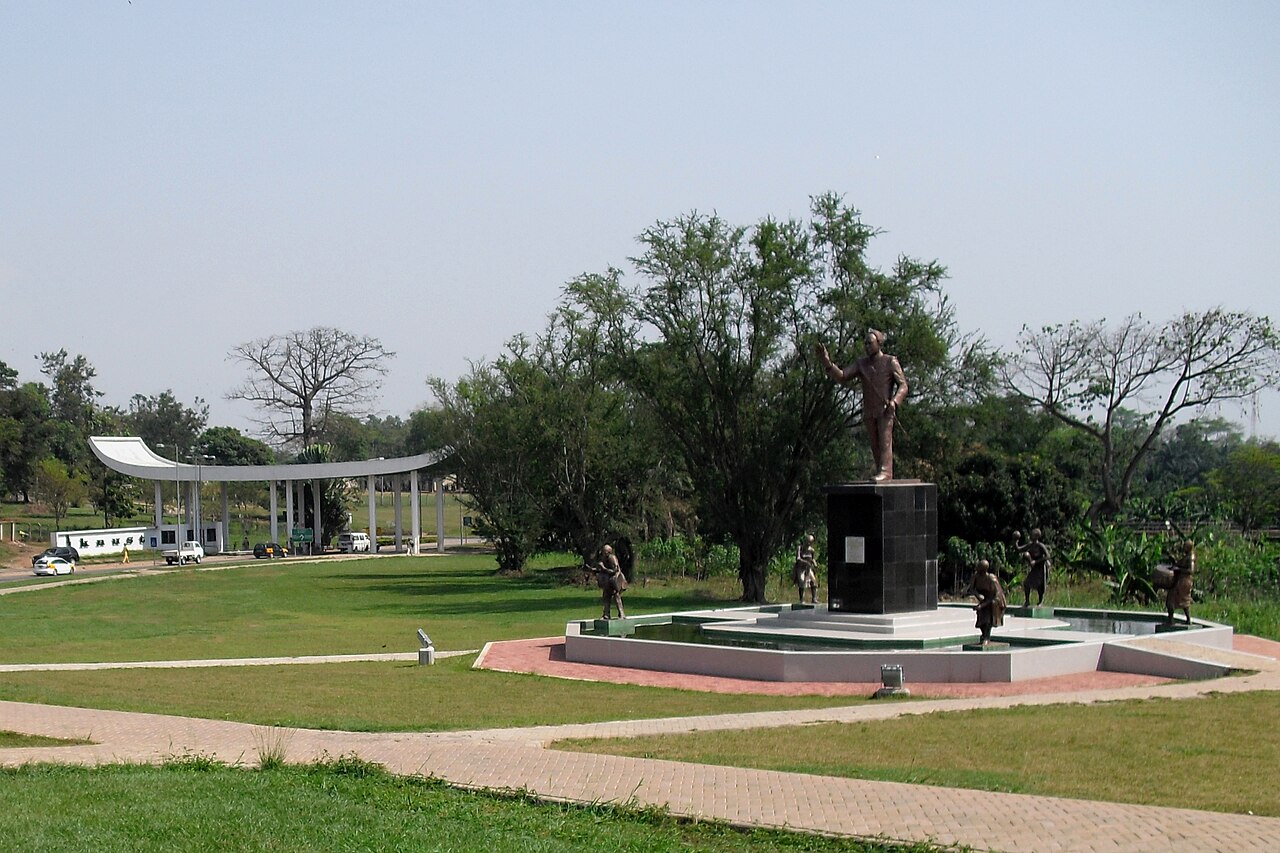
The Mastercard Foundation Scholars Program is the most generously funded scholarship operating at Ghana’s two largest public universities. It funds full undergraduate study, full living costs, mentorship, leadership development, and post-graduation support, for African students who would otherwise not be able to access education at this level. At KNUST and the University of Ghana it has run continuously for over a decade and produced thousands of alumni who are now working across the continent.
This is one of the most competitive Ghana-hosted scholarships you can win, and one of the most life-changing if you do. Here is how the programme works at each university, what the selection panel weighs, and how to write an application that stands out.
What the programme is
The Mastercard Foundation Scholars Program was launched in 2012 with the explicit goal of educating 30,000 young Africans, the majority of them women, in fields and institutions positioned to drive economic and social transformation on the continent. The programme partners with select universities across Africa and globally; KNUST and the University of Ghana are two of its African partner institutions.
At each university the programme has a dedicated office, dedicated staff, and a cohort identity that goes beyond a typical scholarship. Scholars are a community within the university, they meet regularly, do leadership development sessions, undertake community-engagement projects, and have a structured pipeline into internships and post-graduation opportunities. The intention is to produce graduates who not only have the qualification but the leadership formation to act on what their countries need from them.
What the scholarship covers
At both KNUST and UG, the package is full and direct:
- Full tuition and academic fees for the duration of the undergraduate programme
- Accommodation on campus or comparable arrangement
- All living costs through a monthly stipend
- Books, laptops, and academic supplies
- Annual travel between the university and the student’s home country
- Medical insurance through the university health service
- Leadership development programming, workshops, retreats, networking events
- Internship and career placement support in the student’s final years
- Post-graduation alumni network and continuing support
This is materially more generous than most other Ghana-based scholarships. The package is structured so that the scholar arrives, studies, and leaves without out-of-pocket costs for the duration of the programme.
Who is eligible
The programme is Pan-African in scope, which means eligibility extends beyond Ghanaian nationals. The exact list of eligible countries varies by partner university and cycle, but typically includes:
- For KNUST: African nationals from across the continent, with a meaningful intake from Ghana, Nigeria, Kenya, Uganda, Rwanda, Ethiopia, Burkina Faso, and other West and East African countries
- For University of Ghana: similarly broad African intake, often with explicit slots for students from particular regions
Beyond nationality:
- Demonstrated financial need is mandatory. The programme exists for “economically disadvantaged” students. Documentary evidence of family income and household circumstances is required.
- Strong academic record, for undergraduate entry, top-tier WASSCE or equivalent secondary results. The bar is high; admitted candidates typically have results in the top decile of their cohort.
- Demonstrated leadership and community engagement, extracurricular involvement, community service, leadership roles in school or community. The selection panel looks for evidence the candidate has already been doing something with what they have.
- Commitment to give back, the programme is explicit that scholars are expected to commit to returning to their home country or another African country to contribute. This is a hard expectation, not soft preference.
Age limits apply: typically applicants must be under 25 at the start of the programme, though specific cut-offs vary by cycle.
The programme is also explicit about its gender balance: at least 70 per cent of scholars across the global cohort are women. At African partner institutions including KNUST and UG, women applicants are actively prioritised.
Eligible programmes
At both universities, the programme funds a broad range of undergraduate degrees, but priority is given to fields aligned with continental development priorities:
- STEM, engineering, computer science, agriculture, health sciences, natural sciences
- Social sciences and policy, economics, public administration, development studies
- Business, business administration, finance, entrepreneurship
- Education, for future teachers and education researchers
- Health, medicine, nursing, public health, pharmacy
Liberal arts and humanities programmes are eligible at both universities but the intake into those programmes is smaller.
When applications open
The application cycle is annual and tied to the start of the Ghanaian academic year. The pattern, broadly:
| Stage | Typical timing |
|---|---|
| Cycle announcement | February to March |
| Application window opens | March to May |
| Application deadline | May to July |
| Shortlisting and interviews | June to August |
| Final decisions | August to September |
| Scholar arrival | August to September (start of academic year) |
The exact dates vary year to year. Both universities publish notices on their respective Mastercard Foundation Scholars Program pages:
- KNUST: search “Mastercard Foundation Scholars KNUST” or visit the university’s scholars office page
- University of Ghana: the programme runs through the Office of International Programmes; check ug.edu.gh for current cycle notices
Apply early in the cycle. Late submissions are accepted up to the deadline but the selection panel has more time and patience for applications submitted in the first half of the window.
How competitive is it
The programme does not publish acceptance figures at the partner-university level. What is clear from announcements and from talking to alumni: each university takes a cohort of roughly 80 to 150 new scholars a year, and application volumes run into the thousands. The programme is one of the most competitive scholarships in Ghana.
The bar is high because the package is generous, the reputation is strong, and the cohort identity is appealing. Applicants come for the community as much as for the funding.
How to apply, step by step
1. Confirm you qualify before investing time
Read the current cycle’s eligibility criteria carefully. The programme rejects roughly half of all applications at the first-screen review because applicants did not meet a stated requirement (age, nationality, programme, or financial need threshold). Confirm citizenship, age, programme eligibility, and the financial need bar before filling out anything.
2. Plan a minimum of three months ahead
This is not a scholarship you put together over a weekend. The application is detailed, the essays are demanding, and the documentation gathering takes time. The strongest applicants start six months before the cycle deadline.
3. Gather the documentation
- Government-issued ID (Ghana Card for Ghanaian applicants, passport for others)
- Academic records, secondary school transcript and certificate, WASSCE or equivalent results
- For continuing university students: current transcript
- Two or three reference letters: at least one academic, ideally one community or leadership
- Family income documentation, parent payslips, employer letters, or community attestation; for self-employed or informal-sector families, a notarised statement and supporting evidence
- Evidence of leadership and community engagement, letters, certificates, photographs of activities
- Passport photographs
4. Apply through both the university admissions track and the Scholars programme track
This is the part most applicants get wrong. The Mastercard Foundation Scholars Program at KNUST and UG is not a standalone scholarship you apply for separately; it runs through (or alongside) the university admissions process.
- For KNUST: apply through the standard KNUST undergraduate admissions, and then through the Mastercard Foundation Scholars Office for the scholarship overlay
- For UG: similar, apply through UG admissions, and through the Office of International Programmes Mastercard Foundation Scholars track
The two applications are linked. You cannot win the scholarship without being admitted to the university; you cannot be considered for the scholarship without applying through the dedicated Scholars channel.
5. Write the essays seriously
The Scholars Program application includes several essays, typically on motivation, leadership experience, community engagement, and post-graduation plans. These are weighted heavily.
A strong set of essays:
- Uses specific moments and concrete examples rather than generalities
- Names the African problem the candidate wants to work on, in concrete terms
- Shows demonstrated leadership through real examples, not assertions
- Articulates a clear post-graduation plan that names countries, sectors, and types of work
We have a longer guide on writing a strong motivation letter that applies directly here.
6. Submit early and prepare for the interview
Shortlisted candidates are interviewed, typically a 30 to 45 minute conversation with a panel including programme staff and faculty. The interview is conversational, focused on motivation, character, and the candidate’s stated plans, with at least one situational ethics question.
Dress conservatively, arrive early, bring originals of every document you submitted as scans. Be prepared to be asked about anything specific in your written application, the panel reads carefully.
7. If admitted, prepare for cohort orientation
Successful applicants are invited to a cohort orientation, typically in August, before the academic year begins. Attendance is mandatory; absence without strong cause has cost candidates the scholarship.
What makes a strong applicant
In conversation with programme alumni and reading the official materials, the consistent themes:
- Strong academic performance, but not necessarily the absolute top of the class. Selection panels prefer well-rounded candidates over top-grade-only candidates.
- Demonstrated leadership, concrete roles, concrete results. Founded a club; ran a community project; taught Sunday school for three years. Specificity beats grandeur.
- Genuine community engagement, not list-padding. The panel can tell.
- A clear, specific post-graduation plan that maps to identified African needs. “I will return to my country and contribute” is weak; “I will join the public health unit at Ridge Hospital and focus on maternal health in the Greater Accra region” is strong.
- Honesty about financial circumstances with proper documentation. The need assessment is rigorous.
Mistakes that lose the scholarship
- Treating the essays as generic. The selection panel reads thousands; generic essays are forgotten before the next one is read.
- Applying only to the university and assuming Scholars consideration happens automatically. It does not. You must apply through the dedicated Scholars channel.
- Inflating leadership or community engagement. The panel investigates; inflation costs the application.
- Missing the financial need documentation. Without it, the application cannot be scored on the need axis, and the panel moves on.
- Treating post-graduation plans as filler. The give-back commitment is one of the most weighted parts of the application.
Where to find more
- Mastercard Foundation Scholars Program global page: mastercardfdn.org/all/scholars
- KNUST Mastercard Foundation Scholars Office: check knust.edu.gh for the current cycle notice and contact details
- University of Ghana Office of International Programmes: ug.edu.gh, the Scholars Program runs through this office at UG
- Alumni network: the programme has an active alumni community. A 30-minute conversation with a recent alumnus is the single most useful preparation you can do.
The programme also runs at other African partner universities (the African Leadership University in Rwanda, Ashesi University in Ghana, the American University of Beirut, the University of Cape Town, and others). If you do not place at KNUST or UG, the broader programme is worth looking at as well, eligibility and process vary by institution but the core philosophy is consistent.
Share this guide
Found this useful? Send it to a friend who is applying right now.
Need a hand?
Have someone read your application before you submit.
A second pair of eyes on your essays and CV catches what you cannot see anymore. That is what we do.
See our servicesFurther reading

Scholarships
The GNPC Foundation scholarships: oil money funding the next generation of Ghanaian engineers
Scholarships
The COCOBOD scholarship for children of Ghana's cocoa farmers

Scholarships
Ashesi University financial aid: getting into the cohort that pays nothing

Scholarships